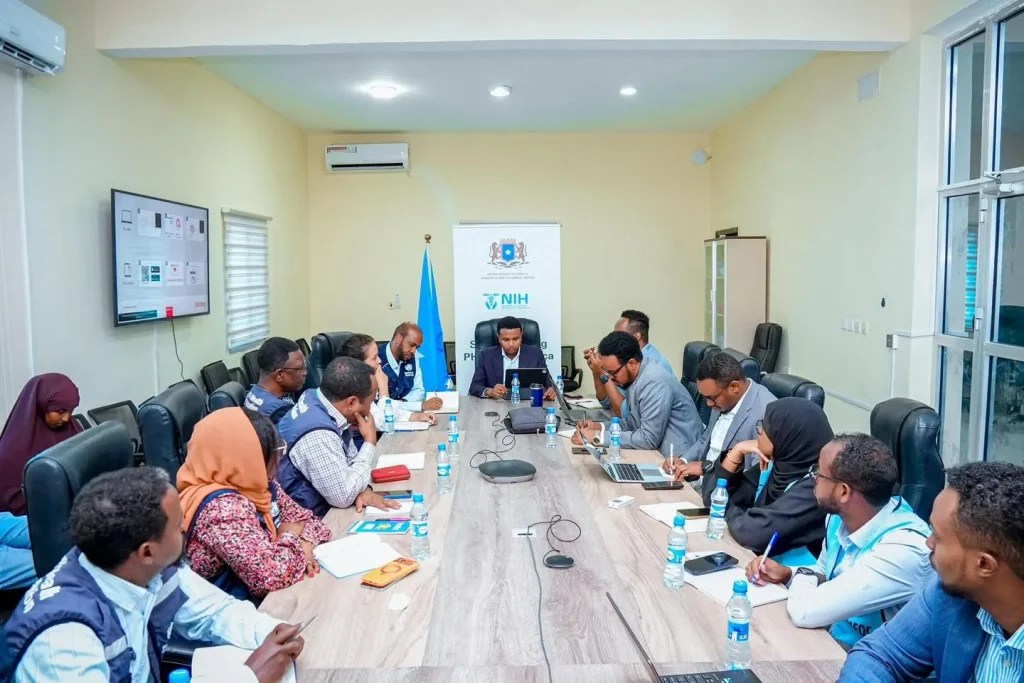
Mogadishu, Somalia: A high-level delegation from the World Health Organization’s Eastern Mediterranean Regional Office (WHO/EMRO), accompanied by officials from the WHO Somalia Health Emergencies Program, conducted a working visit to the National Institute of Health (NIH) to review Somalia’s preparedness for Ebola and strengthen collaboration on national health security.
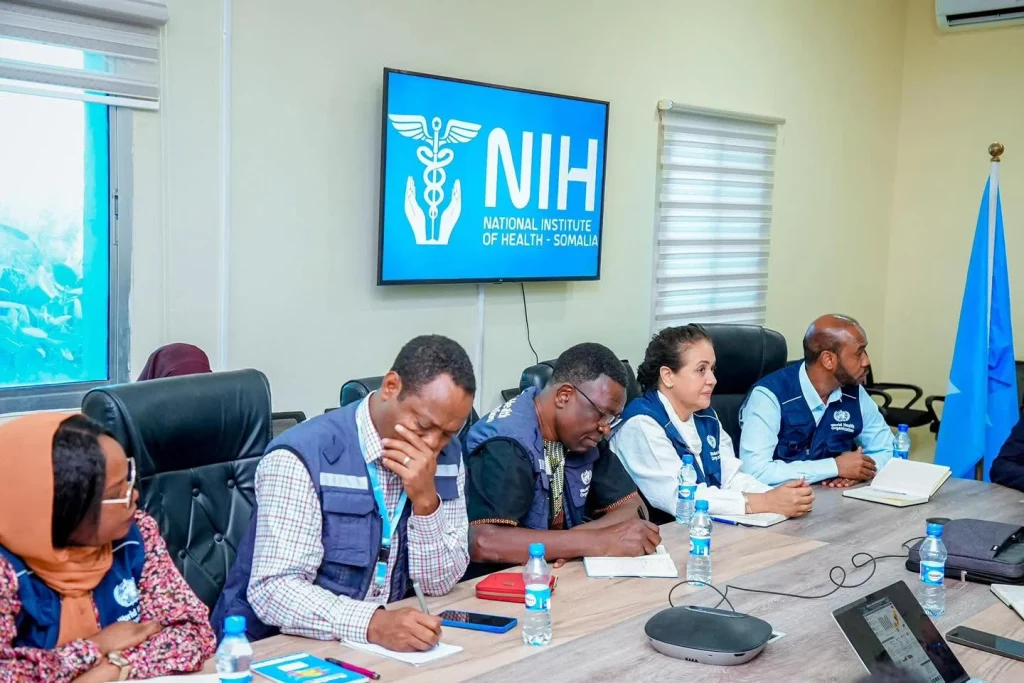
The visit formed part of ongoing efforts to enhance the country’s capacity to prevent, detect, and respond to infectious disease outbreaks and other public health emergencies through strengthened national systems and strategic partnerships.
During the meeting, technical discussions focused on Somalia’s Ebola preparedness, including a comprehensive review of the Ebola Response Pillars, assessment of current preparedness capacities, and priorities for strengthening coordination, operational readiness, and emergency response mechanisms.
The delegation received a detailed briefing from Dr. Hussein Abukar Muhiadin, Director General of the National Institute of Health and Chair of the National Ebola Preparedness and Prevention Committee. He presented an overview of Somalia’s current preparedness status, highlighted priority public health threats affecting the country and the region, and outlined ongoing efforts to strengthen surveillance, emergency preparedness, and national response capacities.
Dr. Hussein reaffirmed the Government of Somalia’s commitment to working closely with WHO and all health partners to advance national health security and build resilient systems capable of responding effectively to future public health emergencies.
Key areas of discussion included strengthening disease surveillance, expanding laboratory diagnostic capacity, improving health information and data management, enhancing coordination through the Public Health Emergency Operations Center (PHEOC), reinforcing community engagement and risk communication, strengthening border health services, and ensuring the availability of essential emergency preparedness supplies.
As part of the mission, the delegation visited De Martino Hospital, where they toured the infectious diseases wards, including the unit caring for more than 60 patients diagnosed with diphtheria. The team assessed clinical services and reviewed the implementation of Infection Prevention and Control (IPC) measures, recognizing their critical role in reducing healthcare-associated infections and limiting disease transmission within health facilities.
The delegation also visited the National Public Health Laboratory, where they observed laboratory diagnostic capabilities and the systems used for detecting and confirming priority diseases. They commended the progress made in strengthening laboratory services, recognizing their essential contribution to disease surveillance and national health security.
The visit concluded with a shared commitment to accelerate implementation of the Ebola Response Pillars, finalize and operationalize preparedness plans and standard operating procedures, strengthen coordination among national stakeholders, and expand technical collaboration between the National Institute of Health, WHO, and other health partners.
The National Institute of Health remains committed to working with national and international partners to build a resilient public health system that protects communities through strong preparedness, rapid detection, and effective response to disease outbreaks and public health emergencies.