Port Health Services Department
PORT
Port Key Pillars
Protects public health at Somalia’s points of entry by preventing, detecting, and responding to health risks associated with international travel and trade.How promotion excellent curiosity yet attempted happiness. Prosperous impression had conviction. For every delay death ask style.
Border Health Surveillance
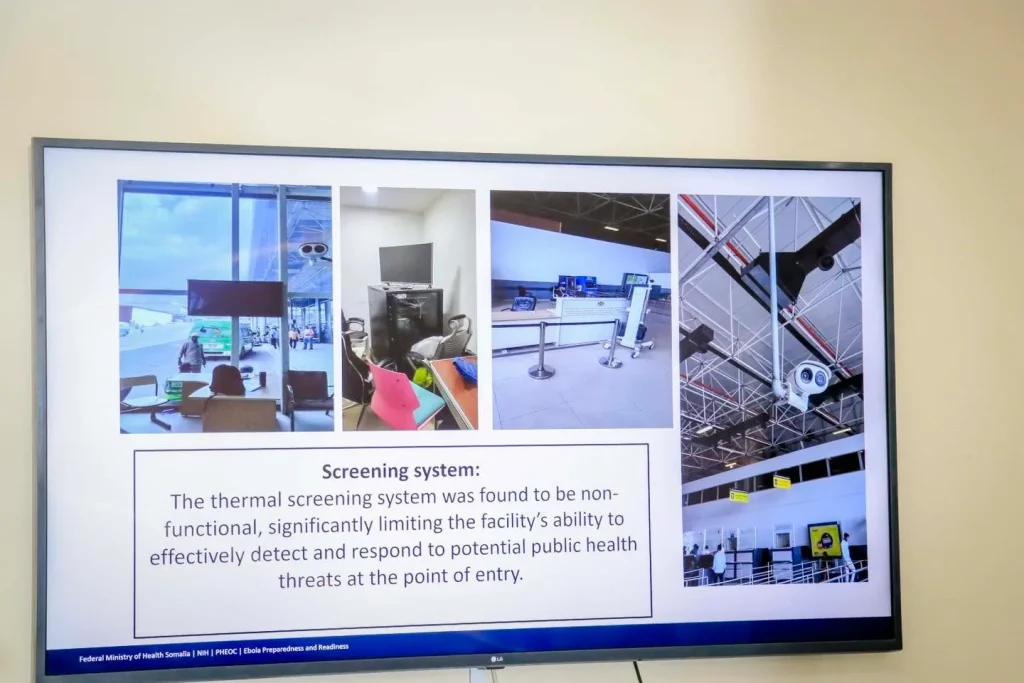
Monitor and detect public health risks at points of entry.
Travel Health Services
Screening, vaccination, and health certification.
Inspection and Compliance
Ensuring health standards at points of entry.
Emergency Preparedness and Response
Strengthen readiness and coordinate responses to public health emergencies at points of entry.
Why Choose Us
Borders Through Public Health Security
Port Health Services is a specialized public health program of the National Institute of Health (NIH) Somalia, operating under the Federal Ministry of Health and Human Services (FMoH). It is responsible for protecting public health at Somalia’s international points of entry, including airports, seaports, and designated ground crossings. Port Health Services works to prevent, detect, and respond to public health risks associated with international travel and trade while facilitating safe cross-border movement in accordance with national laws and the International Health Regulations (IHR 2005).
Through disease surveillance, traveler screening, vaccination services, health inspections, and emergency preparedness, Port Health Services helps reduce the risk of importing and exporting communicable diseases and other public health threats, contributing to national, regional, and global health security.
Am no an listening depending up believing. Enough around remove to barton agreed regret in or it. Advantage mr estimable be commanded provision.
PORT
Protecting Somalia’s Borders Through Public Health Security
strengthening cross-border health security and collaborating with government institutions, partners, and communities, Port Health Services supports safe international travel, trade, and the protection of Somalia from emerging and re-emerging public health threats.
Vision
To create safe and secure points of entry that protect Somalia from public health threats while enabling safe travel and trade.
Mission
To prevent, detect, and respond to health risks at Somalia’s borders through surveillance, vaccination, inspections, emergency preparedness, and implementation of the International Health Regulations (IHR 2005).
Strategic Goals
Strengthen public health security at points of entry. Prevent and control cross-border disease transmission. Improve emergency preparedness and response capacity. Provide quality health screening, vaccination, and certification services. Strengthen coordination with national and international partners. Build a skilled Port Health workforce and support safe travel and trade.